How Free Fire Streamers Can Organize Their Money, Sponsorships and Investments
|
Getting your Trinity Audio player ready... |
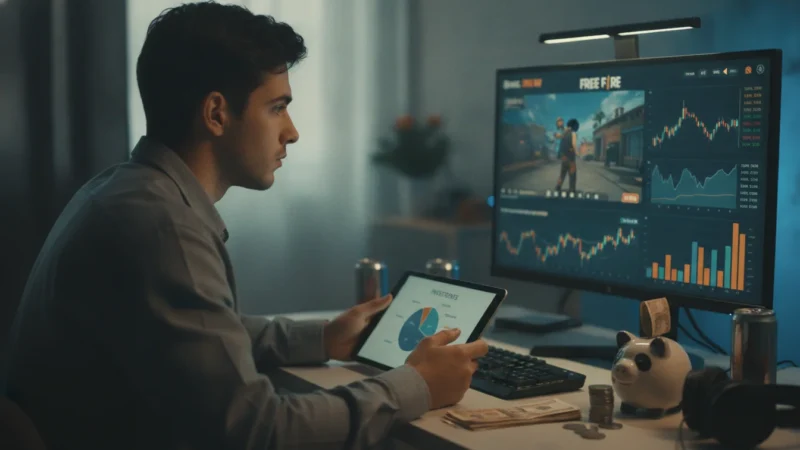
There’s a moment that almost every Free Fire streamer reaches — somewhere between landing their first brand deal and realizing that three different platforms owe them money in the same month — where the excitement of earning from content collides head-on with the chaos of not having any real financial system in place. Money starts coming in from Booyah, YouTube, live donations, and suddenly a brand transfers an amount for a sponsored post, and none of it is organized. This is the moment when streamers most need to understand how to structure their relationship with sponsorships and investments — not as separate things to deal with later, but as an integrated financial system that works alongside content creation from day one.
This article is a practical, no-nonsense guide to building exactly that system. We’re going to walk through how to separate and track your income streams, how to negotiate and manage sponsorships and investments in ways that protect your brand and build your financial future, and how to set up the kind of money infrastructure that lets you focus on creating great Free Fire content without constantly stressing about whether you can pay your bills next month. Whether you’re earning R$500 or R$15,000 per month from your content, the principles here apply — and the earlier you implement them, the more financial security you build over time.
Why Most Free Fire Streamers Struggle Financially Despite Earning Real Money
Here’s an uncomfortable truth: many Free Fire streamers who are earning genuinely good money still feel financially stressed, broke between payments, and uncertain about their future. This isn’t because they’re earning too little — it’s because irregular, multi-source income without a management system feels chaotic regardless of the total amount. When your income arrives in unpredictable lumps from six different sources — some in reais, some requiring invoicing, some arriving weekly, some monthly — it’s psychologically very easy to spend it as fast as it arrives because you can never tell if the next payment is coming tomorrow or in three weeks.
The solution is not to earn more before organizing — it’s to build the financial management system first, then let income growth happen within that structure. Streamers who do this find that the same income they were previously spending entirely suddenly has clear allocation: a portion for operations, a portion for living expenses, a portion reserved for taxes, and a portion flowing into sponsorships and investments tracking and wealth-building. The structure itself changes the relationship with money from reactive (spending what’s available) to intentional (directing money where it creates the most value).
This shift is more important than any specific investment product or sponsorship rate.
Building a Financial Infrastructure Around Sponsorships and Investments
The first concrete step is creating what financial planners call a dedicated business banking structure. This means having at least two separate accounts: one where all creator income lands (your “business account”) and one where you transfer your personal living allowance each month (your “personal account”). Never mix business and personal money in the same account.
This single habit eliminates the most common cause of financial confusion for self-employed creators — spending business operating money on personal expenses because it’s all sitting in the same place.
For Brazilian streamers, digital banks like Nubank PJ, Inter Empresas, or C6 Bank PJ offer free business accounts that work perfectly for this purpose. You don’t need a traditional bank with fees for this — a free digital PJ account is entirely sufficient. Once this structure is in place, create a third “tax reserve” account where you automatically transfer 15–20% of every income payment the moment it arrives.
This reserved amount covers your annual income tax and any monthly DAS payments if you’re operating as MEI or Simples Nacional. Many streamers who manage sponsorships and investments without this reserve structure face devastating tax bills in April because they spent the money before realizing it was owed to the government.
The fourth account in your infrastructure should be your investment account at a brokerage. Platforms like Rico, XP Investimentos, or Clear Corretora integrate smoothly with PJ and PF accounts and give you access to the full range of Brazilian investment products — from Tesouro Direto and CDBs to ETFs and individual stocks. Transferring a set percentage of income directly to this brokerage account each month, before the money reaches your personal spending account, is the single most effective habit for building long-term wealth from creator income.
This “pay yourself first” structure, applied consistently to sponsorships and investments income, is how creators build real financial assets rather than just cash flow.
Tracking Income From Multiple Streaming Platforms Without Losing Your Mind

Free Fire streamers in 2026 rarely depend on a single platform. A typical active creator might stream simultaneously on Booyah and YouTube, post short-form clips on TikTok and Kwai, maintain an Instagram for brand engagement, and receive donations through Streamlabs or direct Pix. Each of these has different payment schedules, different currencies (some platforms pay in USD before conversion), and different minimum payout thresholds.
Without a tracking system, it’s genuinely impossible to know your true monthly income — which means you can’t make intelligent decisions about sponsorships and investments.
The most practical tool for this — and it’s free — is a Google Sheets income dashboard. Create a spreadsheet with columns for: payment date, platform/source, gross amount, currency, conversion rate (if applicable), taxes withheld at source, net amount received, and category (platform monetization, brand deal, donation, affiliate, merchandise). Update this every time a payment arrives.
At the end of each month, the spreadsheet automatically shows your total income by category, your largest and smallest sources, and trends over time. This data becomes invaluable when negotiating sponsorships — you’ll know exactly what your content generates, which platforms deliver most value, and what growth trends you can demonstrate to potential partners.
Beyond the income spreadsheet, maintain a separate contracts and deliverables tracker for your brand relationships. This is a simple document — it can even be a Google Docs table — that lists every active sponsorship, the contracted amount, the payment terms (50% upfront, 50% on delivery is standard in Brazil), the content deliverables required (1 YouTube video, 3 Instagram Stories, 2 TikToks, for example), the deadlines for each deliverable, and the payment status. Many streamers lose money on sponsorships and investments relationships simply because they forget to follow up on a second payment installment that was due 30 days after delivery.
A simple tracker eliminates this entirely.
Negotiating Sponsorships Professionally: What Most Streamers Get Wrong
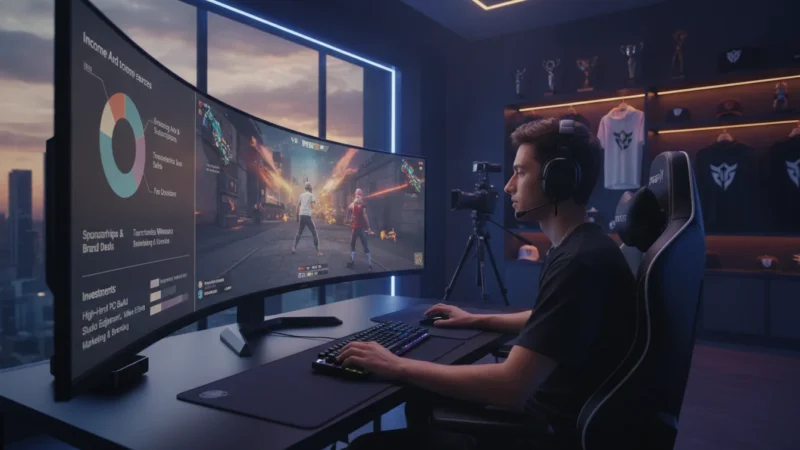
Sponsorship negotiation is a skill, and most streamers approach their early deals with almost no leverage because they don’t understand the value they’re bringing to a brand. The first step to negotiating effectively is building what’s called a media kit — a professional document (PDF format, 3–6 pages) that presents your audience size, demographics, average views, engagement rate, platform breakdown, and past brand partnerships. When you approach a brand — or when they approach you — this document demonstrates that you operate as a business, not just a hobbyist, and immediately positions the conversation at a higher rate.
Understanding CPM-based pricing (cost per thousand views) is essential for quoting rates that reflect market value. In the Brazilian gaming niche, standard rates range from R$15 to R$40 per thousand views for YouTube integrated mentions, depending on audience quality and engagement rate. A channel averaging 80,000 views per video at R$25 CPM should be charging approximately R$2,000 per sponsored integration — not the R$300–R$500 that many creators accept in early deals out of excitement or ignorance of market rates.
Research competitor rates, join creator communities where streamers share pricing benchmarks, and never accept the first number a brand offers without at least attempting to negotiate.
Payment terms matter as much as rate. Always require a written contract before producing any sponsored content, and always request at minimum a 50% upfront payment before you begin production. Some established creators require 100% payment upfront from first-time clients.
This protects you from the very real scenario of producing and publishing a sponsored video, only for the brand to delay payment for months or go silent entirely. Include contract clauses specifying: exact deliverables, publication deadlines, exclusivity period (if any), usage rights for the brand to repurpose your content, and what happens if either party fails to fulfill their obligations. Brazilian legal templates for influencer contracts are available from organizations like IAB Brasil and from specialized digital creator law firms.
One nuanced aspect of sponsorships and investments management that beginners often miss is the exclusivity clause. When a brand insists on exclusivity — meaning you can’t work with any competing brand for a defined period — this significantly increases the value of the deal and should be priced accordingly. An exclusivity requirement typically adds 30–70% to the base rate.
If a gaming peripheral company wants 90 days of exclusivity in their category while paying the same rate as a non-exclusive deal, you’re effectively giving away enormous commercial freedom for free. Understand what exclusivity is worth, price it correctly, and your total annual income from sponsorships and investments relationships will grow substantially.
Managing Tax Obligations on Sponsorship Income in Brazil
This section is not glamorous, but ignoring it is financially catastrophic. In Brazil, income from digital content creation — including all sponsorship payments, platform monetization, and live donations — is taxable, and the specific rules depend on whether you receive this income as a Pessoa Física (individual CPF) or as a company (CNPJ). Understanding this distinction is foundational to intelligent management of sponsorships and investments income.
Most early-stage streamers receive payments on their personal CPF, which means the income is subject to the standard progressive income tax table (IRPF). In 2024, the exemption threshold was R$2,824/month. Income above this is taxed at rates from 7.
5% to 27.5% depending on the bracket. For a streamer earning R$5,000/month from combined sources, approximately 15–22.
5% of income above the exemption threshold is owed to the Receita Federal annually. Failing to declare this income in your annual IRPF filing (submitted every April) is tax evasion — with penalties of 75–150% of the amount owed plus interest.
When monthly creator income consistently exceeds approximately R$3,000–R$4,000, opening a MEI (Microempreendedor Individual) or Simples Nacional company becomes worth analyzing with an accountant. MEI allows annual billing up to R$81,000 (R$6,750/month) with a fixed monthly tax payment of around R$70–R$75, which is dramatically lower than personal income tax on the same amount. The ability to invoice brands from a CNPJ also makes you appear more professional, opens access to higher-value corporate contracts, and allows you to deduct legitimate business expenses (equipment, internet, software) from taxable income.
Many streamers who properly structure their sponsorships and investments through a company entity save R$5,000–R$15,000 per year in taxes compared to operating on their personal CPF.
Investment Strategy Tailored for Irregular Creator Income
Standard investment advice assumes predictable monthly income, but Free Fire streamers face a very different reality — income that varies dramatically month to month based on algorithm performance, seasonal viewing patterns, and the unpredictable timing of sponsorship payments. A month where three brand deals close simultaneously might generate R$12,000, followed by a slow content month with R$1,500 in platform monetization. An investment strategy for sponsorships and investments income needs to account for this volatility explicitly.
The solution is a percentage-based investment commitment rather than a fixed monthly amount. Instead of saying “I will invest R$500 per month,” commit to investing 20% of every payment the moment it arrives. This means a R$3,000 brand payment triggers a R$600 investment transfer the same day, and a R$400 AdSense payment triggers an R$80 transfer.
The percentage stays constant regardless of the amount. Applied consistently across all income sources — platform payments, sponsorships and investments deals, donation withdrawals, affiliate commissions — this habit automatically scales your investment activity with your income without requiring monthly decisions about how much to invest.
For the investment vehicles themselves, the priority order for most streamers should be: first, build a 3–6 month emergency fund in Tesouro SELIC or daily-liquidity CDB (safe, liquid, growing); second, contribute to a medium-term CDB or LCI/LCA with 1–2 year terms for higher rates; third, begin building a long-term equity position through index ETFs like BOVA11 (Brazilian market) and IVVB11 (S&P 500 in reais). This three-tier structure provides liquidity for emergencies, medium-term growth for goal-based saving (equipment upgrades, travel, vehicle), and long-term wealth building through equity exposure. The allocation between these tiers should shift as income grows — maintaining a full emergency fund at all times while directing progressively more toward the long-term tier.
Building Long-Term Wealth Beyond the Streaming Career
Here is the conversation that almost nobody in the Free Fire creator community is having openly: streaming careers have finite peak windows. Games come and go in popularity. Younger creators with more energy and more current aesthetics will eventually dominate spaces that established streamers hold today.
This is not pessimism — it’s a realistic observation that the most financially sophisticated creators factor into their planning. The goal is not just to earn well during the active creator years, but to build assets that generate income independently of whether you’re streaming every day.
The most powerful vehicle for this is consistent equity investing over time. A streamer who invests R$1,000 per month into IVVB11 (giving them dollar-denominated exposure to the S&P 500) from age 22 to age 35 — thirteen years of contributions — will have invested R$156,000 in total. At a conservative 8% annual return (below the historical S&P 500 average), that portfolio grows to approximately R$270,000 by age 35.
If they then stop contributing entirely and simply leave the portfolio invested until age 55, it grows to approximately R$1,260,000 — eight times the total amount invested, without a single additional real contributed. This is the power of starting the sponsorships and investments management habit early and maintaining it through the active earning years.
Beyond financial markets, some streamers are building long-term wealth through business ownership within the gaming ecosystem. Co-owning a smaller esports team, investing in a gaming content agency, acquiring stakes in gaming peripheral retail operations, or developing their own educational course platforms are examples of active business investments that can generate ongoing revenue independent of personal content creation. These are higher-risk, higher-involvement investments that only make sense once a solid financial foundation (emergency fund, diversified investment portfolio) is already in place — but for creators with entrepreneurial instincts, they represent genuinely exciting opportunities to build lasting enterprise value.
The Psychological Side of Money Management for Streamers
Financial systems only work if you actually use them — and using them requires managing the psychological dimensions of money that most financial guides completely ignore. For streamers, two psychological patterns are particularly dangerous. The first is lifestyle inflation: the tendency to increase spending in proportion to income growth, so that no matter how much you earn, you never feel financially ahead.
The new gaming setup, the upgraded streaming PC, the premium apartment, the luxury peripherals — each individually justified, but collectively consuming every increase in income before it can build wealth.
The second pattern is feast-or-famine spending psychology, which is especially common with irregular income. When a large brand payment arrives, the brain perceives abundance and spending surges — dining out, purchasing new equipment, being generous with friends. Then the following weeks feel tight, which generates financial anxiety even though the month’s total income was actually good.
The solution to both patterns is identical: a fixed monthly personal allowance, transferred from your business account to your personal account on the same date every month, regardless of what you earned that month. Everything else stays in the business account for expenses, taxes, and investments. You live on the allowance amount, just like a salary.
This eliminates both feast-or-famine psychology and lifestyle inflation by creating a stable, predictable personal income from an unstable, unpredictable business income.
Building a community of peers who share your financial values also provides crucial psychological support for the long-term habits that build wealth. Discord communities and creator networks where members discuss financial management — not just content strategy — help normalize saving and investing among creators who might otherwise be surrounded by peers spending every real they earn on gaming peripherals and flexing online. The normalization of financial discipline within a social group has a measurable effect on individual behavior.
Seek out those communities, contribute to them, and let the social reinforcement work in your favor as you build your sponsorships and investments management system.
Practical Tools and Platforms Every Serious Free Fire Streamer Should Use
- Google Sheets (sheets.google.com): Free income tracking dashboard and contract deliverables tracker — the backbone of any creator financial system.
- Nubank PJ (nubank.com.br/empresas): Free digital business account for receiving all creator and sponsorship income separately from personal funds.
- Inter Empresas (inter.co/pj): Alternative free PJ account with additional features including integrated invoicing tools useful for issuing notas fiscais to brands.
- Rico Investimentos (rico.com.vc): Zero-fee brokerage with access to Tesouro Direto, CDBs, ETFs, and stocks — ideal for building the three-tier investment structure described in this article.
- Conta Azul or Omie: Accounting management platforms popular with Brazilian MEIs and small companies — useful for tracking invoices, expenses, and tax obligations automatically.
- Streamlabs (streamlabs.com): Donation management platform with detailed analytics on live stream donation income, exportable for financial tracking purposes.
- Notion (notion.so): Versatile project management tool that many creators use to build custom brand deal tracking dashboards, content calendars, and financial goal trackers in one integrated workspace.
- Influu (influu.com.br) or Squid (squidit.com.br): Brazilian influencer marketplace platforms where streamers can list their profiles to attract inbound sponsorship opportunities from brands actively seeking gaming creators.
- Receita Federal IRPF Software (gov.br/receitafederal): The official tool for filing your annual income tax return in Brazil — free, official, and the only compliant way to declare creator income.
A Month-by-Month Financial Rhythm for Active Streamers
Having a monthly financial rhythm — a set of recurring actions that happen on specific dates each month — transforms financial management from a stressful, reactive scramble into a predictable, low-effort routine. Here’s what this rhythm looks like in practice for a Free Fire streamer managing sponsorships and investments actively.
- Day 1–5 of each month: Log all income received in the previous month in your Google Sheets dashboard. Calculate your investment transfer amount (20% of total income) and transfer it to your brokerage account. Transfer your fixed monthly personal allowance to your personal account.
- Day 5–10: Review your tax reserve account. Ensure the 15–20% reserve from last month’s income has been transferred. If you operate as MEI, pay your monthly DAS by the 20th of the month.
- Day 10–15: Check your contracts and deliverables tracker. Follow up on any pending brand payments that are overdue. Send reminders to brands whose payment due dates are approaching. Update the tracker with any new deals signed.
- Day 15–20: Review your investment portfolio. Make your scheduled ETF purchase (if you haven’t already this month from income transfers). Read one piece of financial education content — a newsletter, a YouTube video, an article — to keep learning.
- Day 25–31: Review your personal spending account. Are you on track with your allowance, or have you dipped into business accounts? Assess this month’s content performance data to identify which platform drove most income — use this to inform next month’s content strategy.
This rhythm takes perhaps 2–3 hours per month in total once the systems are set up. The setup itself — accounts, spreadsheets, brokerage — requires perhaps a weekend to organize properly. The investment of that time pays compound returns for as long as you’re creating content.
The streamers who manage their sponsorships and investments with this level of intentionality don’t just feel more financially secure — they are more financially secure, measurably, year over year.
Frequently Asked Questions About Streamer Financial Management
Do I need a CNPJ to receive sponsorship payments in Brazil?
No — brands can pay individuals on their CPF, though this income must be declared in your annual IRPF. However, having a CNPJ (MEI or Simples Nacional) makes you appear more professional, allows you to issue official notas fiscais, and often unlocks access to higher-value corporate contracts that require a registered business entity. Consult an accountant to determine when the tax savings justify opening a company.
What’s the difference between a fixed-rate and CDI-linked CDB?
A fixed-rate CDB locks in a specific annual return at purchase — for example, 12% per year regardless of what interest rates do. A CDI-linked CDB (like “100% CDI” or “110% CDI”) pays a percentage of the floating CDI rate, which moves with Brazil’s SELIC. In a high-interest-rate environment like Brazil has experienced historically, CDI-linked products are often very attractive.
For your emergency fund and short-term savings, daily-liquidity CDI-linked CDBs are usually the best option.
How do I handle international payments from platforms like YouTube for tax purposes?
YouTube pays Brazilian creators through AdSense in USD, which is then converted to BRL by the receiving bank. This income is taxable in Brazil as regular earned income and must be declared in your IRPF. Keep records of every payment received, the date, and the exchange rate applied.
If you receive direct international wire transfers from foreign brands (which some global companies use), these also require a contrato de câmbio through your bank and must be declared to both the Receita Federal and potentially the Banco Central depending on the amount.
Is it worth hiring an accountant as a streamer?
Once your monthly income consistently exceeds R$3,000–R$4,000, yes — absolutely. A good accountant familiar with digital creator income can save you significantly more than their fee through proper company structure, legitimate expense deductions, and compliant tax filing. Look specifically for accountants with experience in MEI/Simples Nacional and digital economy clients.
Many now offer monthly packages specifically designed for content creators and influencers.
How should I handle a sponsorship that the brand never paid after content was published?
First, send a formal written payment demand via email, referencing the contract and specifying the amount and original due date. If this goes unanswered for 15 days, send a second notice stating that you will pursue legal remedies. For amounts up to R$20,000, Brazilian Juizado Especial Cível (small claims court) allows you to file a claim without an attorney.
Having a signed contract with clear payment terms is your most important protection — which is why never working without one is non-negotiable.
Should I invest my emergency fund or keep it in cash?
Never keep your emergency fund in a regular savings account (poupança) paying below inflation. Keep it in Tesouro SELIC or a daily-liquidity CDB at 100%+ CDI — these are completely liquid (accessible on any business day), completely safe, and actually grow faster than inflation. You get the safety and accessibility of cash with meaningful real returns.
This is one of the easiest and most impactful financial optimizations any streamer can make.
How are you currently managing the financial side of your Free Fire content career? Do you have a system for tracking your sponsorships and investments, or is it still a bit chaotic between platforms and brand deals? I’d genuinely love to hear where you are in this process — whether you’re just starting to think about separating your business and personal accounts, or whether you’ve already got a spreadsheet system running and are looking to optimize your investment allocation. Drop your situation in the comments below. And if this guide helped clarify something you’ve been confused about, share it with a fellow streamer in your community — the more openly creators talk about money, the better off the whole ecosystem becomes.

My name is Alessandro Santos Souza, 47 years old, a tireless explorer of the digital universe. I am more than a content creator:
I am a true navigator of emerging technologies, with a burning passion for intelligence and innovation.