How the Fall of the Dollar Impacta o Mercado de Criptomoedas em Países Emergentes
|
Getting your Trinity Audio player ready...
|
The global financial system is deeply interconnected, and even subtle shifts in currency strength can create ripple effects across multiple markets. One of the most discussed scenarios in recent years is how the weakening of the U.S.
dollar Impacta o Mercado de Criptomoedas em Países Emergentes. For investors, entrepreneurs, and everyday users in developing economies, this relationship is far from abstract—it directly influences purchasing power, investment strategies, and financial stability.
When the dollar loses strength, it doesn’t just affect international trade or central bank policies. It reshapes how people perceive value, especially in countries where local currencies are volatile. This is where understanding how the decline Impacta o Mercado de Criptomoedas em Países Emergentes becomes crucial.
Cryptocurrencies often emerge as alternatives during economic uncertainty, but their behavior is not always predictable.
In this article, we’ll break down the mechanisms behind these changes, explore real-world implications, and offer practical insights you can apply—whether you’re a beginner or already navigating the crypto space.
Understanding Currency Dynamics and Crypto Behavior
To fully grasp how a falling dollar Impacta o Mercado de Criptomoedas em Países Emergentes, it’s essential to understand the relationship between fiat currencies and digital assets. The U.S.
dollar serves as the world’s reserve currency, meaning that many global transactions and commodities are priced in dollars. When its value declines, investors often look for alternative stores of value.
Cryptocurrencies, especially decentralized ones, are increasingly seen as such alternatives. In emerging markets, where inflation and currency devaluation are more common, the weakening of the dollar can amplify interest in crypto. This happens because local currencies may fluctuate even more dramatically in response, making digital assets appear relatively stable or even profitable.
Another factor to consider is investor psychology. When trust in traditional financial systems decreases, people naturally explore decentralized solutions. This is one of the key ways the situation Impacta o Mercado de Criptomoedas em Países Emergentes—through a shift in perception and behavior rather than purely economic fundamentals.
Impacta o Mercado de Criptomoedas em Países Emergentes Through Inflation and Purchasing Power
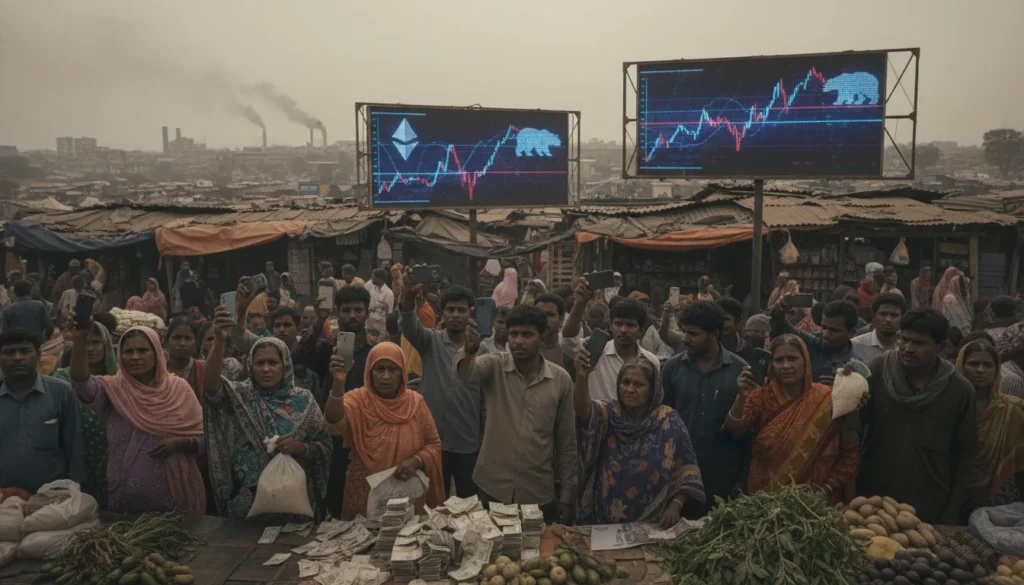
Inflation plays a central role in how the dollar’s decline Impacta o Mercado de Criptomoedas em Países Emergentes. In many developing countries, inflation rates are already high. When the dollar weakens, imported goods can become cheaper temporarily, but local currencies may still lose value due to structural weaknesses.
This creates a paradox. On one hand, a weaker dollar might ease some pressure on imports. On the other, it can destabilize local economies, pushing individuals toward cryptocurrencies as a hedge.
People start to convert their savings into digital assets not necessarily for profit, but for preservation of value.
Here are some common effects observed in emerging markets:
- Increased adoption of cryptocurrencies as a hedge against inflation
- Higher trading volumes in peer-to-peer crypto platforms
- Growth in stablecoin usage despite underlying dollar weakness
- Shift from traditional banking to decentralized finance tools
These behaviors clearly show how economic uncertainty Impacta o Mercado de Criptomoedas em Países Emergentes in a practical, everyday sense.
The Role of Stablecoins in a Weak Dollar Environment
One of the most interesting dynamics is how stablecoins behave when the dollar declines. Since many stablecoins are pegged to the U.S.
dollar, their value is directly tied to it. This creates a unique situation where the very asset people rely on for stability may be affected by broader currency trends.
Despite this, stablecoins remain popular in emerging economies. Why? Because even a weakening dollar is often more stable than local currencies. This paradox highlights another layer of how the situation Impacta o Mercado de Criptomoedas em Países Emergentes.
For users in these regions, stablecoins offer:
- Easy access to dollar-denominated value
- Protection against local currency volatility
- Faster and cheaper international transactions
- Entry into decentralized finance ecosystems
However, it’s important to stay cautious. If the dollar continues to weaken significantly, the long-term reliability of dollar-backed stablecoins may be questioned. This uncertainty further Impacta o Mercado de Criptomoedas em Países Emergentes by encouraging diversification into other digital assets.
Investor Behavior and Market Opportunities
Another crucial aspect of how the dollar’s decline Impacta o Mercado de Criptomoedas em Países Emergentes is investor behavior. In times of uncertainty, investors tend to seek assets with growth potential or protective qualities. Cryptocurrencies often fit both categories.
Retail investors in emerging markets are particularly sensitive to these shifts. Many are already accustomed to economic instability, making them more open to experimenting with alternative investments. As a result, a falling dollar can trigger increased participation in crypto markets.
Some practical strategies investors use include:
- Diversifying portfolios with both major and emerging cryptocurrencies
- Using stablecoins for short-term liquidity
- Participating in decentralized finance (DeFi) platforms for passive income
- Monitoring global economic indicators to time market entry
Understanding these strategies can help you navigate how global currency trends Impacta o Mercado de Criptomoedas em Países Emergentes and make more informed decisions.
Risks and Challenges in Emerging Crypto Markets
While there are opportunities, there are also significant risks. The way the dollar’s decline Impacta o Mercado de Criptomoedas em Países Emergentes is not always positive. Volatility, regulatory uncertainty, and lack of financial education can create challenges.
Many emerging markets lack clear crypto regulations, which can expose users to scams and unreliable platforms. Additionally, high volatility in crypto prices can amplify financial risks for individuals already dealing with unstable incomes.
Key risks to consider include:
- Regulatory crackdowns or sudden policy changes
- Security risks such as hacks and fraud
- Over-reliance on volatile assets
- Lack of financial literacy among new users
These factors show that while economic changes Impacta o Mercado de Criptomoedas em Países Emergentes, the outcomes depend heavily on how individuals and governments respond.
Practical Tips for Navigating Crypto in Emerging Economies
If you’re living in or investing in an emerging market, understanding how the dollar’s decline Impacta o Mercado de Criptomoedas em Países Emergentes can give you a strategic advantage. But knowledge alone isn’t enough—you need actionable steps.
Here are some practical tips:
- Start small: Avoid investing large amounts until you understand market dynamics
- Use trusted platforms: Prioritize security and reputation
- Diversify assets: Don’t rely on a single cryptocurrency
- Stay informed: Follow global economic news and crypto trends
- Think long-term: Avoid emotional decisions based on short-term volatility
By applying these strategies, you can better adapt to how global financial shifts Impacta o Mercado de Criptomoedas em Países Emergentes and protect your investments.
The Future of Crypto in a Changing Global Economy

Looking ahead, the relationship between fiat currencies and digital assets will continue to evolve. The way the dollar fluctuates will remain a key factor that Impacta o Mercado de Criptomoedas em Países Emergentes, but it won’t be the only one.
Technological advancements, regulatory developments, and increased adoption will all play roles. Emerging markets may become innovation hubs for crypto usage, especially in areas like remittances, digital payments, and decentralized finance.
As more people gain access to smartphones and the internet, the barriers to entry will decrease. This accessibility will further amplify how economic changes Impacta o Mercado de Criptomoedas em Países Emergentes, creating both opportunities and challenges.
Final Thoughts and Reader Engagement
The global economy is constantly shifting, and understanding how these changes affect different markets is essential. The decline of the U.S.
dollar is just one piece of a much larger puzzle, but it plays a significant role in shaping how digital assets are perceived and used.
Now that you understand how this dynamic Impacta o Mercado de Criptomoedas em Países Emergentes, you’re better equipped to make informed decisions—whether you’re investing, saving, or simply exploring new financial tools.
What do you think?
- Have you noticed changes in crypto adoption in your region?
- Do you see cryptocurrencies as a safer alternative to traditional currencies?
- How do you manage risk in such a volatile environment?
Share your thoughts in the comments—we’d love to hear your perspective!
FAQ About Crypto and Dollar Decline
Why does a weaker dollar increase interest in cryptocurrencies?
Because it reduces trust in traditional financial systems and encourages people to seek alternative stores of value.
Are stablecoins still safe if the dollar declines?
They are relatively stable compared to local currencies, but their long-term reliability depends on broader economic conditions.
Is investing in crypto riskier in emerging markets?
Yes, due to higher volatility, regulatory uncertainty, and limited financial education.
Can cryptocurrencies replace traditional currencies?
Not entirely, but they can complement them, especially in unstable economies.
How can beginners start safely?
Start with small investments, use trusted platforms, and continuously educate yourself.

My name is Alessandro Santos Souza, 47 years old, a tireless explorer of the digital universe. I am more than a content creator:
I am a true navigator of emerging technologies, with a burning passion for intelligence and innovation.