Green Mortgage Loans: How to Secure Lower Interest Rates in 2026
|
Getting your Trinity Audio player ready...
|
The financial world of 2026 has finally aligned its profit motives with the preservation of our planet. For years, “going green” was seen as an expensive lifestyle choice, but today, it has become the most effective way to lower your cost of living and your debt. A major driver of this shift is the emergence of the Crédito Imobiliário Verde system (known globally as Green Mortgage Loans), a financial instrument designed to reward homeowners who prioritize energy efficiency and sustainable construction.
If you are looking to buy a home or refinance an existing one this year, understanding how to leverage these specialized credit lines is not just about environmental ethics—it is about significant financial gain. By choosing a property with a low carbon footprint, you are essentially signaling to banks that your asset is “future-proofed,” making you a lower-risk borrower entitled to better terms.
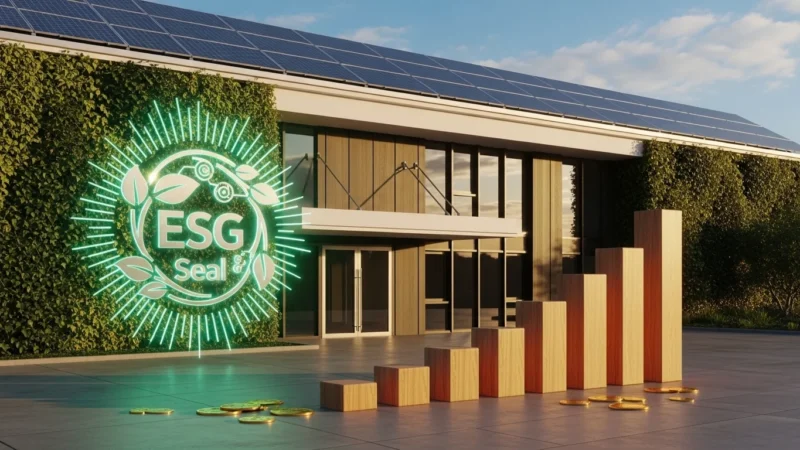
But why are banks so eager to offer Crédito Imobiliário Verde with reduced interest rates? In 2026, global financial regulations have mandated that lenders maintain a specific percentage of “green assets” in their portfolios to comply with ESG (Environmental, Social, and Governance) standards. This has created a competitive environment where banks are essentially fighting for borrowers who own energy-efficient homes. When you apply for a Crédito Imobiliário Verde, you are helping the bank meet its regulatory quotas, and in return, they pass those savings on to you in the form of interest rate discounts, often ranging from 0.
25% to 0.75% below the standard market rate. Over a 30-year amortization period, this small percentage can translate into tens of thousands of dollars saved on interest payments.
Securing these benefits requires more than just a passing interest in ecology; it requires a strategic approach to property selection and documentation. In the current market, Crédito Imobiliário Verde are tied to specific certifications and performance metrics that prove a home consumes less energy than a traditional build. Whether you are looking at a brand-new “Net Zero” house or planning a deep retrofit of an older property, the way you present your case to the lender will determine the depth of the discount you receive.
This article will guide you through the intricacies of the green credit market in 2026, providing actionable insights into how you can make the global sustainability trend work for your personal bank account.
The Evolution of Sustainable Finance and Green Credit
To truly appreciate the value of Crédito Imobiliário Verde, we must look at how the real estate market has changed over the last five years. In the early 2020s, sustainable homes were a niche market, often viewed as over-engineered and difficult to value. However, by 2026, the data has proven that energy-efficient homes hold their value better during market downturns and have significantly lower default rates.
Homeowners with lower utility bills are statistically more likely to make their mortgage payments on time, as they are less vulnerable to energy price spikes. This realization has turned Crédito Imobiliário Verde from a “nice-to-have” specialty product into a mainstream financial powerhouse that lenders use to stabilize their long-term balance sheets.
The architecture of Crédito Imobiliário Verde in 2026 is built on transparency. Banks now use integrated digital platforms that pull energy performance data directly from government databases or certified inspectors. This means the process of proving a home’s efficiency is much smoother than it used to be.
Lenders are no longer just looking at the sales price; they are looking at the “Total Cost of Ownership,” which includes projected energy and water expenses over the next decade. By choosing a home that qualifies for Crédito Imobiliário Verde, you are essentially opting into a more rigorous financial vetting process that rewards you for the long-term durability and efficiency of your residence. It is a win-win scenario where the bank gets a safer asset and you get a cheaper loan.
Furthermore, the growth of Sustainable Home Incentives has created a secondary market for green bonds. When a bank issues a mortgage for a sustainable home, they can bundle that loan with others to create “Green Mortgage-Backed Securities.” Institutional investors, such as pension funds and sovereign wealth funds, are hungry for these products to meet their own sustainability targets.
This high demand at the institutional level ensures that the capital flowing into Crédito Imobiliário Verde remains plentiful and cheap. As a borrower in 2026, you are the primary beneficiary of this global “green premium,” provided you know which doors to knock on and which certifications to highlight in your application.
Essential Certifications to Qualify for Lower Rates

The most important step in securing Crédito Imobiliário Verde is ensuring the property meets recognized efficiency standards. In 2026, the industry has consolidated around a few key metrics. For new constructions, the NZEB (Net Zero Energy Building) status is the gold standard.
A home that produces as much energy as it consumes is practically guaranteed to qualify for the lowest possible interest rates. However, even if a home isn’t fully Net Zero, achieving a high Energy Performance Certificate (EPC) rating, such as an ‘A’ or ‘B’, is often sufficient to trigger a green discount. Lenders will require a copy of this certificate before they can finalize the terms of your Crédito Imobiliário Verde.
For those looking at international or high-end properties, certifications like LEED (Leadership in Energy and Environmental Design) or BREEAM remain highly influential. These systems look beyond just energy use, evaluating water efficiency, indoor air quality, and the sustainability of the materials used in construction. When applying for Crédito Imobiliário Verde, presenting a LEED-certified property can often lead to additional perks, such as waived appraisal fees or faster processing times.
Lenders view these third-party certifications as a rigorous form of due diligence that has already been completed, reducing their administrative burden and risk profile. It is always worth checking if the developer of a new project has already secured these “Green Credentials” on your behalf.
If you are buying an older home that doesn’t yet meet these standards, don’t despair. Many banks in 2026 offer a “Green Refurbishment” or Energy Efficiency Improvement Loan. This allows you to secure a standard mortgage initially, with a pre-approved “top-up” at a lower rate specifically for upgrades like heat pumps, solar arrays, or high-performance insulation.
Once the renovations are complete and the home’s EPC rating improves, the bank converts the entire balance into Crédito Imobiliário Verde, effectively lowering your interest rate retroactively. This is an excellent strategy for adding value to a “fixer-upper” while simultaneously reducing your long-term financing costs.
- EPC Rating A or B: The baseline requirement for most mainstream green banking products.
- Solar Readiness: Properties with pre-installed solar infrastructure often get preferential treatment.
- Passive House Standards: Extreme efficiency that often triggers the maximum possible rate discount.
- Smart Home Integration: Systems that monitor and optimize energy use in real-time are valued by lenders.
- Water Conservation: Greywater recycling systems can provide an extra “Sustainability Bonus” on certain loans.
The Financial Impact of Interest Rate Discounts
To understand the real-world value of Crédito Imobiliário Verde, we need to look at the numbers. In 2026, the average standard mortgage rate might sit at 6.5%, while a Crédito Imobiliário Verde rate could be as low as 5.
85%. On a $400,000 mortgage, that 0.65% difference results in a monthly saving of approximately $170.
While that might not sound revolutionary, when you compound that over the life of the loan, you are looking at over $61,000 in saved interest. This is effectively “free money” that is generated simply by choosing a more efficient building. When you add the $2,000 to $3,000 in annual energy bill savings, the total financial benefit of a green home becomes undeniable.
Moreover, Crédito Imobiliário Verde often come with higher LTV (Loan-to-Value) limits. Because lenders perceive energy-efficient homes as being more resilient and having a lower risk of “value erosion,” they may be willing to lend you 90% or even 95% of the property value, compared to the standard 80%. This lower down payment requirement can be the difference between buying a home today or having to save for another two years.
For first-time buyers in 2026, the green path is often the fastest route to homeownership, providing both a lower barrier to entry and a more affordable monthly commitment once they move in.
Lenders also factor in the “Green Resale Premium.” Data from 2025 and early 2026 shows that homes with high energy efficiency ratings sell up to 15% faster and for 8% more than their less efficient neighbors. This “exit strategy” security is why banks are so comfortable offering Crédito Imobiliário Verde.
They know that if they ever have to foreclose, they can recoup their capital quickly. As a homeowner, this means your “Green Home” is not just a place to live; it is a superior liquid asset. The interest rate discount is just the beginning of the financial advantages that come with sustainable real estate.
Maximizing Your Application for Green Credit
Getting approved for Crédito Imobiliário Verde with the best possible terms requires a bit of “financial grooming.” First, you must ensure that your energy documentation is up-to-date and verified by a licensed professional. In 2026, lenders are wary of “Greenwashing,” so they will often conduct their own energy audit or require a report from a pre-approved list of environmental consultants.
Before you even talk to a loan officer, have your EPC certificate, solar panel specifications, and insulation R-values ready. The more technical data you provide, the easier it is for the bank’s underwriting algorithm to flag your application for green status.
Secondly, consider the Operational Energy Savings. Some advanced lenders in 2026 allow you to include your projected energy savings as part of your “Effective Income.” If you can prove that your new home will save you $300 a month in utilities compared to your current residence, the bank may increase your borrowing capacity.
This “Green Affordability” calculation is a game-changer for people who are right on the edge of qualifying for a larger home. By using Crédito Imobiliário Verde, you are essentially turning your future utility savings into current purchasing power, allowing you to afford a higher-quality home that would have otherwise been out of reach.
Finally, shop around for Specialized Green Lenders. While most major banks now have a green product, some smaller, “values-driven” credit unions and digital-only banks offer even more aggressive Crédito Imobiliário Verde. These institutions often have lower overhead costs and a stronger commitment to environmental goals, leading to deeper discounts or better terms on things like early repayment penalties.
In 2026, the market is highly fragmented, and a “Green Specialist” might offer you terms that a generalist bank simply cannot match. Use comparison tools that specifically filter for “Sustainability-Linked Loans” to ensure you are seeing the full spectrum of available offers.
Future-Proofing Your Investment Beyond the Interest Rate

While the immediate goal of Crédito Imobiliário Verde is to lower your monthly payment, the long-term benefit is protecting your wealth against the “Brown Discount.” As we look toward the 2030s, homes that rely on fossil fuels or have poor insulation will likely face higher taxes, higher insurance premiums, and a dwindling pool of buyers. By securing a green mortgage today, you are ensuring that your property remains on the right side of the “Climate Divide.
” In 2026, we are already seeing the beginning of this trend, where “non-green” homes are sitting on the market longer and requiring deep price cuts to attract interest.
Insurance is the next frontier of this trend. Many insurance companies now offer Eco-Friendly Home Insurance discounts that mirror the logic of Crédito Imobiliário Verde. Efficient homes are often built with modern, fire-resistant materials and advanced sensors that detect leaks or electrical issues before they become catastrophes.
When you combine a green mortgage with a green insurance policy, the total cost of ownership drops even further. This holistic approach to sustainable living is what defines the successful homeowner in 2026. It’s not just about one loan; it’s about a comprehensive strategy to reduce risk and expenses across your entire housing portfolio.
Lastly, consider the Renewable Energy Feed-in Tariffs. If your green home produces excess energy that you sell back to the grid, that income can be used to pay down your Crédito Imobiliário Verde faster. Some innovative banks even allow for “Automated Pre-payments,” where the credits you earn from your solar utility company are sent directly to your mortgage balance.
This creates an “accelerated equity” effect, where your home is literally paying for itself. In 2026, the technology to link your smart meter to your mortgage account is becoming standard, making the dream of a “self-paying home” a practical reality for those who embrace the green financial revolution early.
- Regulatory Resilience: Your home will already comply with future carbon-neutral housing laws.
- Health Benefits: Green homes often have better ventilation and non-toxic materials.
- Grid Independence: Homes with storage batteries are protected from energy outages.
- Higher Rental Yields: Tenants in 2026 pay a premium for “bills-included” green living.
- Emotional Satisfaction: Knowing your home is part of the solution.
The transition to Crédito Imobiliário Verde as the primary vehicle for home financing is one of the most positive developments of 2026. It aligns the interests of the planet, the banker, and the homeowner in a way that creates tangible, measurable value. By taking the time to understand the certifications, the financial incentives, and the long-term market trends, you can position yourself at the forefront of this movement.
Whether you are a first-time buyer or a seasoned investor, the “Green Path” is no longer just the ethical choice—it is the only choice that makes absolute financial sense in the modern economy.
As the market continues to evolve, stay informed about local government rebates and tax credits that can be layered on top of your Crédito Imobiliário Verde. Often, you can use a state-level grant to pay for the solar panels that then qualify you for the bank’s lower interest rate. This “Incentive Stacking” is the secret weapon of the savvy 2026 homeowner.
The era of cheap, dirty credit is over; the era of efficient, sustainable, and rewarding credit has begun. Make sure you are ready to take advantage of it.
What are your thoughts on the green shift in banking? Have you looked into the energy rating of your current home to see if you could qualify for a “Green Refinance”? Are you finding that banks in your area are being proactive about these discounts? Let’s discuss your experiences and questions in the comments below!
Frequently Asked Questions
Does every bank offer Crédito Imobiliário Verde in 2026? Most major international and national banks now have a “Green Product” line. However, the depth of the interest rate discount and the specific requirements (like EPC ‘A’ vs ‘B’) vary significantly between lenders.
Can I convert my existing traditional mortgage into a Crédito Imobiliário Verde? Yes, this is called a “Green Refinance.” If you have made energy-efficient upgrades to your home and can provide a new, higher EPC rating, many banks will allow you to switch to their green terms.
Are Green Mortgage Loans more expensive to set up? Initially, there may be a small cost for the energy audit. However, many banks in 2026 waive these application fees as an incentive to attract green borrowers, making the setup cost often lower than a traditional mortgage.
Do green loans apply to condominiums or just houses? They absolutely apply to condos! If the entire building has a high sustainability rating, individual units are eligible for green credit just like a standalone house.

My name is Alessandro Santos Souza, 47 years old, a tireless explorer of the digital universe. I am more than a content creator:
I am a true navigator of emerging technologies, with a burning passion for intelligence and innovation.